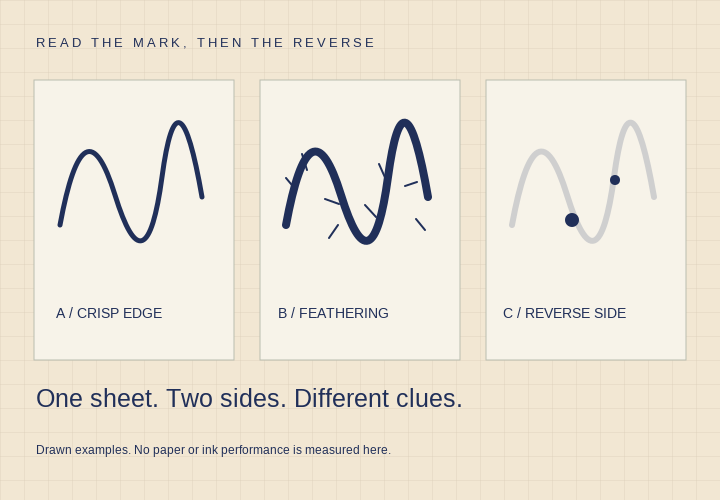
Turn the nib.
Change the line. ↗
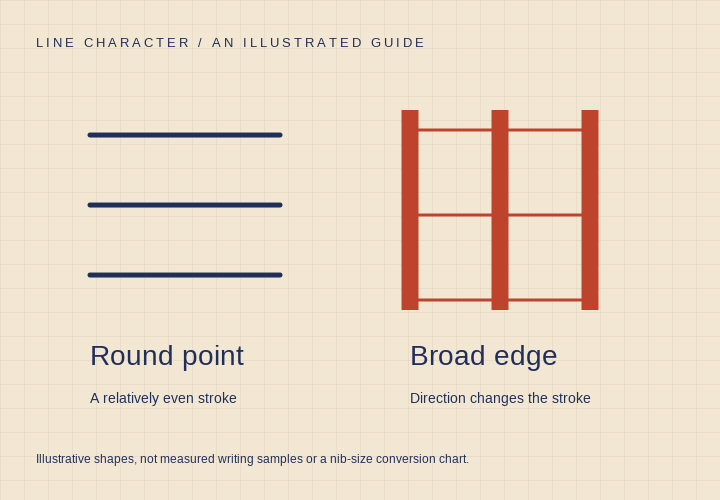
Rotate a simulated broad edge and see why the direction of a stroke matters.
INTERACTIVE SCHEMATIC Daily Nib.
THE EVERYDAY WRITING LAB
One pen. One ink. A little curiosity.
Find a useful next step for the paper and the words in front of you.
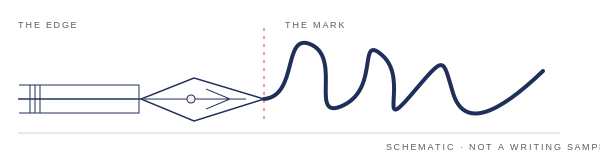
Observe a mark.
Change one thing.
Source-backed references. Space for your own observations.
A practical experiment, built around the way you write.
YOUR OBSERVATION CARD
Pen / nib Ink Paper
Decide what works:
Proposed observation method. Record your own result; this card contains no measured test data.
A SMALL TOOLKIT FOR THE WRITING DESK
Rotate a simulated broad edge and see why the direction of a stroke matters.
INTERACTIVE SCHEMATICRecord your actual setup and observations. Compare entries and export your notes.
YOUR NOTES, ON THIS DEVICE19 manufacturer-listed filling references, each with an exact source and scope.
SOURCED COMPATIBILITY TABLETHE FIELD GUIDES
01 / Paper / a practical method
A repeatable desk check for the page you actually write on.
02 / Nib / a field guide
Start with the size of your handwriting and the marks you want to make.
03 / Ink / care notes
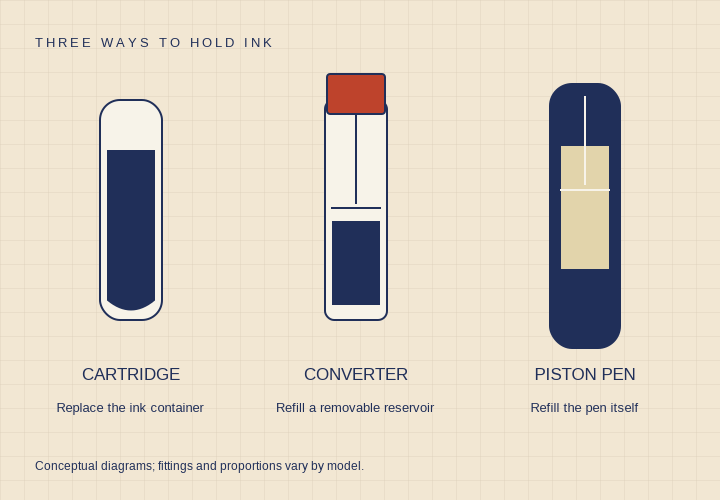
A model-specific approach to filling, cleaning and putting a pen away.
Our original diagrams explain an idea. Your pen, ink, paper and writing habits provide the observations. Keep the two distinct, and the next decision gets easier.
Our sources and editorial method →