 Daily Nib
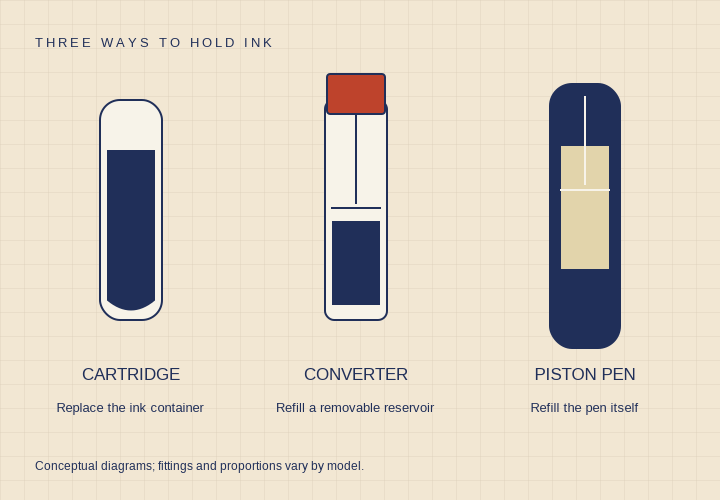
Identify the pen before following a cleaning routine. A removable converter and a retractable nib assembly can call for different handling.
Read the model, then the manual
The PILOT Capless BLACK MATTE guide covers FC-18SR and FC-1800RB. It identifies the CON-40 converter and tells owners to retract the nib after use. When the pen will not be used regularly, PILOT advises draining the ink and cleaning by repeatedly filling and emptying with clean water.
That guide also says not to wash the head and barrel. Treat a generic “soak the pen” instruction cautiously: the parts named in your model’s manual matter. Our compatibility reference links directly to the relevant documentation.
Keep the ink choice traceable
Write down the bottle or cartridge’s exact name. PILOT specifies its fountain pen inks for its pens and warns against mixing inks or using old ink. LAMY likewise advises against mixing colours and recommends rinsing before changing colour. Those are manufacturer instructions, not Daily Nib compatibility tests for third-party inks.
If a product label or manual does not establish suitability for your pen, leave that combination unconfirmed. A similar-looking bottle or a matching colour name is not enough evidence.
Stop before dismantling
PILOT’s care FAQ warns against removing the nib and feed from the grip and against wiping the pen with alcohol. Its retractable Capless body must not be immersed. Consult the exact manual or service team if a rinse does not resolve the issue.
Build a small maintenance record
Keep four entries: the date you filled the pen, the ink used, the date and method of cleaning, and any writing problem you noticed. This is our suggested record, not a prescribed cleaning schedule. It helps you describe a problem without guessing about the last ink or the last maintenance step.
Store those notes with a writing sample. If a problem starts after a change, record that sequence without assuming the change caused it. A service technician can make better use of that history than an unsupported diagnosis.
Make a desk check plan →